Fountain of Fair Fortune book-ban dispute
The Tales of Beedle the BardThe Fountain of Fair Fortune book-ban dispute was a clash at Hogwarts over whether Beedle the Bard’s popular tale should be removed from the school library because it depicts marriage between wizards and Muggles. Lucius Malfoy sought to suppress the story in the name of bloodline purity; Albus Dumbledore refused, framing the demand as an effort to hide the very family history it claimed to defend. The Board of Governors supported Dumbledore, and the exchange became the opening of a lasting political struggle between the two men.
The Tale and the Challenge
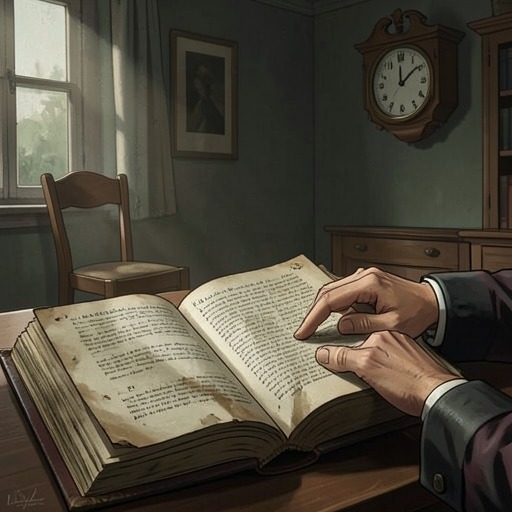
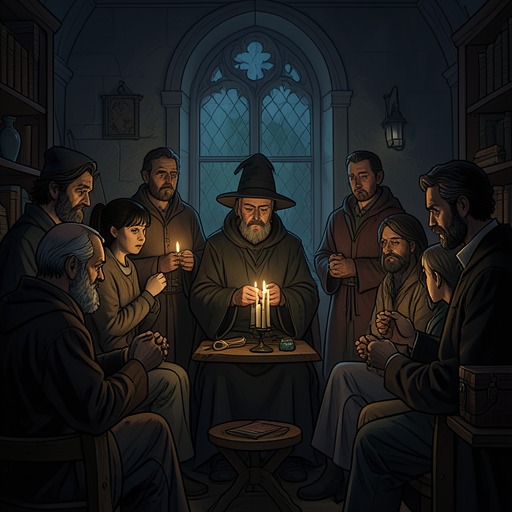
The dispute concerned a story familiar to generations of wizarding children. Beedle’s tales had long been popular bedtime reading, and the Fountain of Fair Fortune was probably the most popular of them. Like the other stories in the collection, it belongs to a tradition in which magical characters must still confront difficulties: possessing magic does not make problems easy to solve. Its subject also touched a fault line in wizarding society, since the story depicts a marriage between a wizard and a Muggle.
That subject had attracted objections before Malfoy’s intervention. The tale’s defenders encountered parents who wanted it removed from Hogwarts’s library, and the account identifies Malfoy as one such objector, notable both as a descendant of Brutus Malfoy and as a former member of the Hogwarts Board of Governors. His demand therefore joined a dispute about children’s reading to a broader argument about which accounts of wizarding life the school would allow its students to encounter.
Malfoy’s Written Demand
Malfoy submitted his request in writing. He argued that any fiction or nonfiction portraying marriage between wizards and Muggles should be kept off Hogwarts’s bookshelves, claiming that such a story might influence his son to compromise the purity of his bloodline. His objection was not presented as a concern about the tale’s literary form or general suitability: it specifically treated wizard–Muggle marriage as a threat to inherited purity.
The written demand made the underlying ideology explicit. Malfoy sought to make a school library enforce a boundary between magical and non-magical families, using the possibility that his son might read the story as a reason to restrict what all Hogwarts students could read. The dispute thus concerned not only one book but also the authority of a parent and former governor to impose blood-purity principles on the school’s shared collection.
Dumbledore’s Refusal and Reasoning
Dumbledore refused to remove the book, and a majority of the Board of Governors backed his decision. In his written reply, he challenged the premise of pure-blood identity: families that claimed purity, he argued, maintained that appearance by disowning, banishing, or lying about Muggles and Muggle-born people in their family trees. He characterized Malfoy’s demand as an attempt to impose that hypocrisy on others by suppressing works that addressed the truths such families denied.
Dumbledore’s argument went beyond exposing what he saw as a contradiction. He maintained that every witch and wizard had Muggle ancestry and therefore considered it both illogical and immoral to remove works dealing with the subject from students’ knowledge. The school’s refusal consequently defended the library as a place where students could encounter material challenging a socially powerful claim, rather than allowing that claim to determine what could be read.
The decision also fits the larger contrast drawn in the commentary between Beedle’s sympathies and the historical pressure on wizarding families to separate themselves from Muggles. In the early fifteenth century, persecution of witches and wizards was intensifying across Europe, and fear helped drive magical communities apart from their non-magical neighbors. That separation eventually culminated in the International Statute of Wizarding Secrecy in 1689. Dumbledore’s defense of a tale about intermarriage therefore stood against a long history in which fear, secrecy, and exclusion could reinforce one another.
Political Consequences
The exchange did not end with the Board’s decision. Dumbledore describes it as the beginning of Malfoy’s long campaign to have him removed from the post of headmaster of Hogwarts. He also began his own campaign to have Malfoy removed from his position as Lord Voldemort’s Favourite Death Eater. A library dispute thus became a sustained institutional and political rivalry, with each man seeking the other’s removal from a position of influence.
Malfoy sent several further letters after Dumbledore’s response. According to Dumbledore, they consisted mainly of insults about his sanity, parentage, and hygiene; he judged them irrelevant to the commentary and did not treat them as altering the substance of the argument. Their existence nonetheless shows that the disagreement persisted beyond the initial exchange, while the school’s refusal to ban the story remained the decisive outcome reported here.
Significance
The dispute reveals how control of children’s literature could become a contest over blood purity and the authority to define wizarding history. Malfoy tried to turn his belief about family lineage into a restriction on the whole school; Dumbledore answered that suppressing the subject would help preserve a false account of that lineage. The majority-backed refusal kept the tale in the library and made the school’s position a direct rebuttal to the demand.
The episode also gives practical force to the collection’s recurring distinction between inherited power and sound judgment. Beedle’s stories were valued not because their magical heroes can solve everything by magic, but because their dilemmas expose the limits and consequences of human choices. In defending a tale that challenged blood-purity claims, Dumbledore treated students’ access to uncomfortable knowledge as more important than protecting an ideology from scrutiny.